

Mag Switch

So as of this morning I have a road track and a drag strip and both have working timer systems. The whole work shop is of course a disaster. But one of the key things was to try and use a Hall Effect transistor as the start timer mechanism. A Hall Effect transistor is one where the presence of a magnetic field will put it into saturation. In full saturation its essentially a conductor which (in this particular circuit) means that the output switches from high to low. But what's important is that unlike a mechanical switch -- there is no need to denounce any mechanical chattering.
Perhaps next week I'll drag out the O'scope and look at the actual switching signal. The other key thing as you will see below is that the sensor and the magnets can just be super glued on to most any start system.
SlanMan start gate and mag sensor
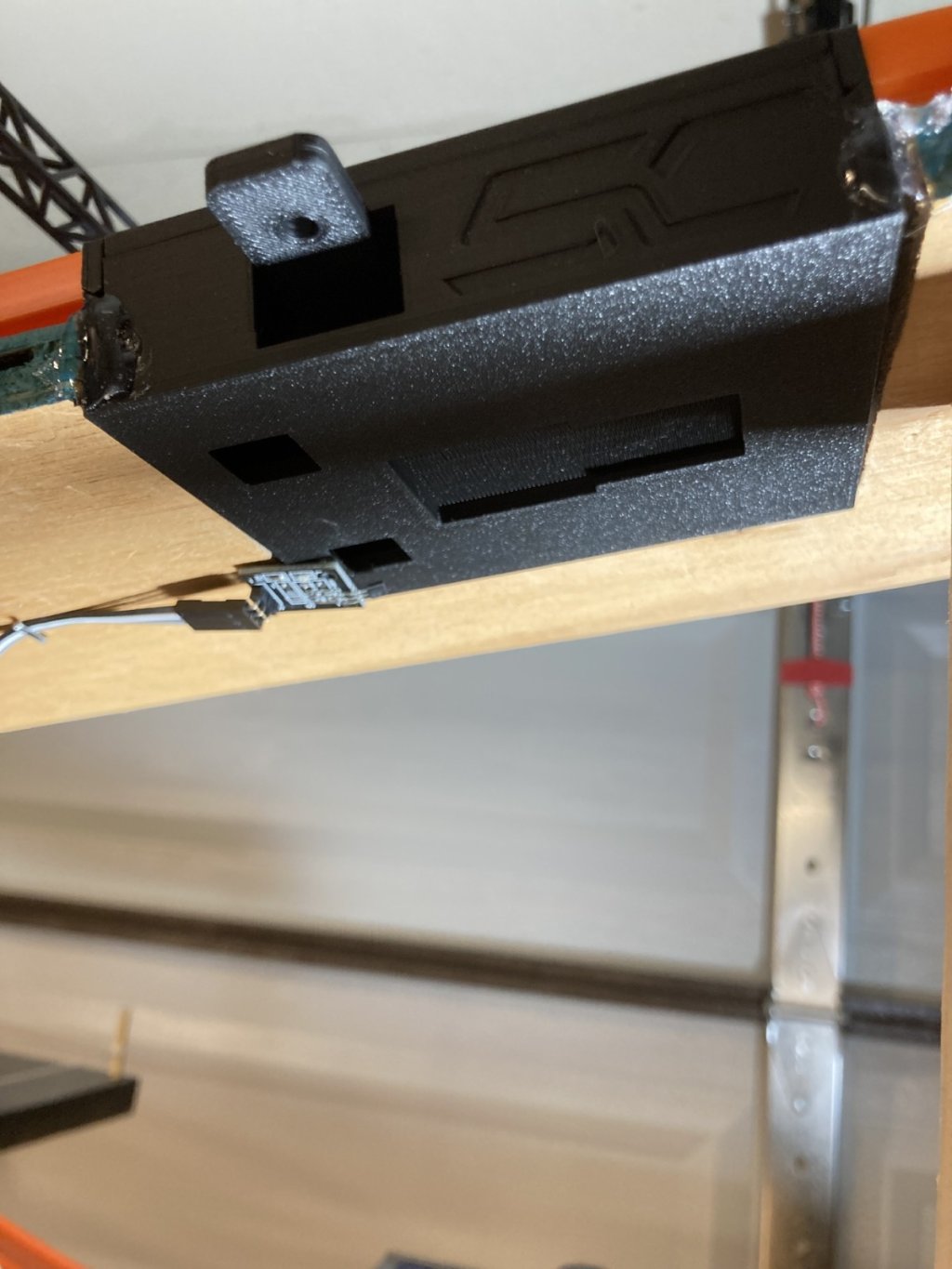
Here you can just see the neodymium magnet recessed and the transistor
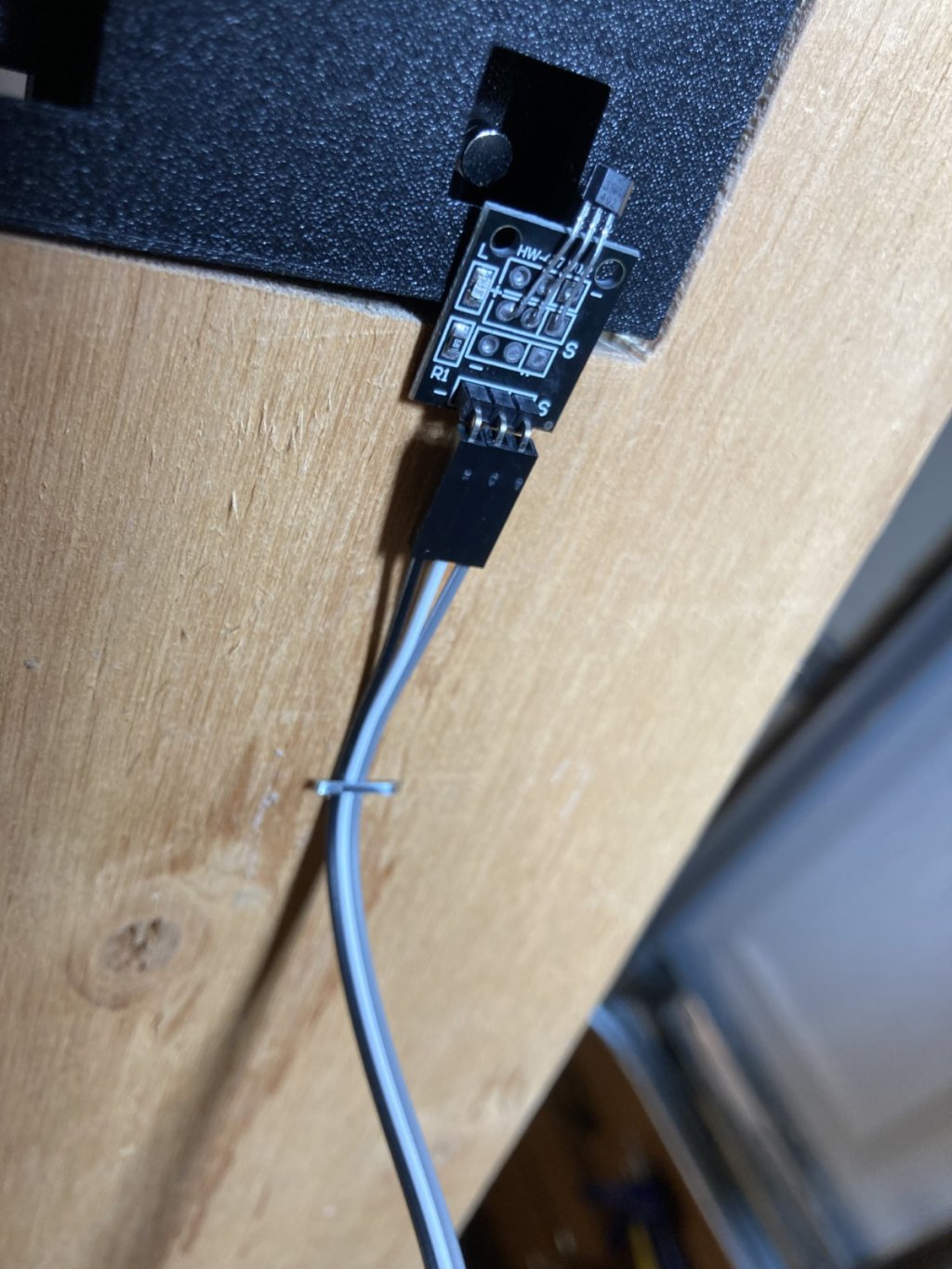
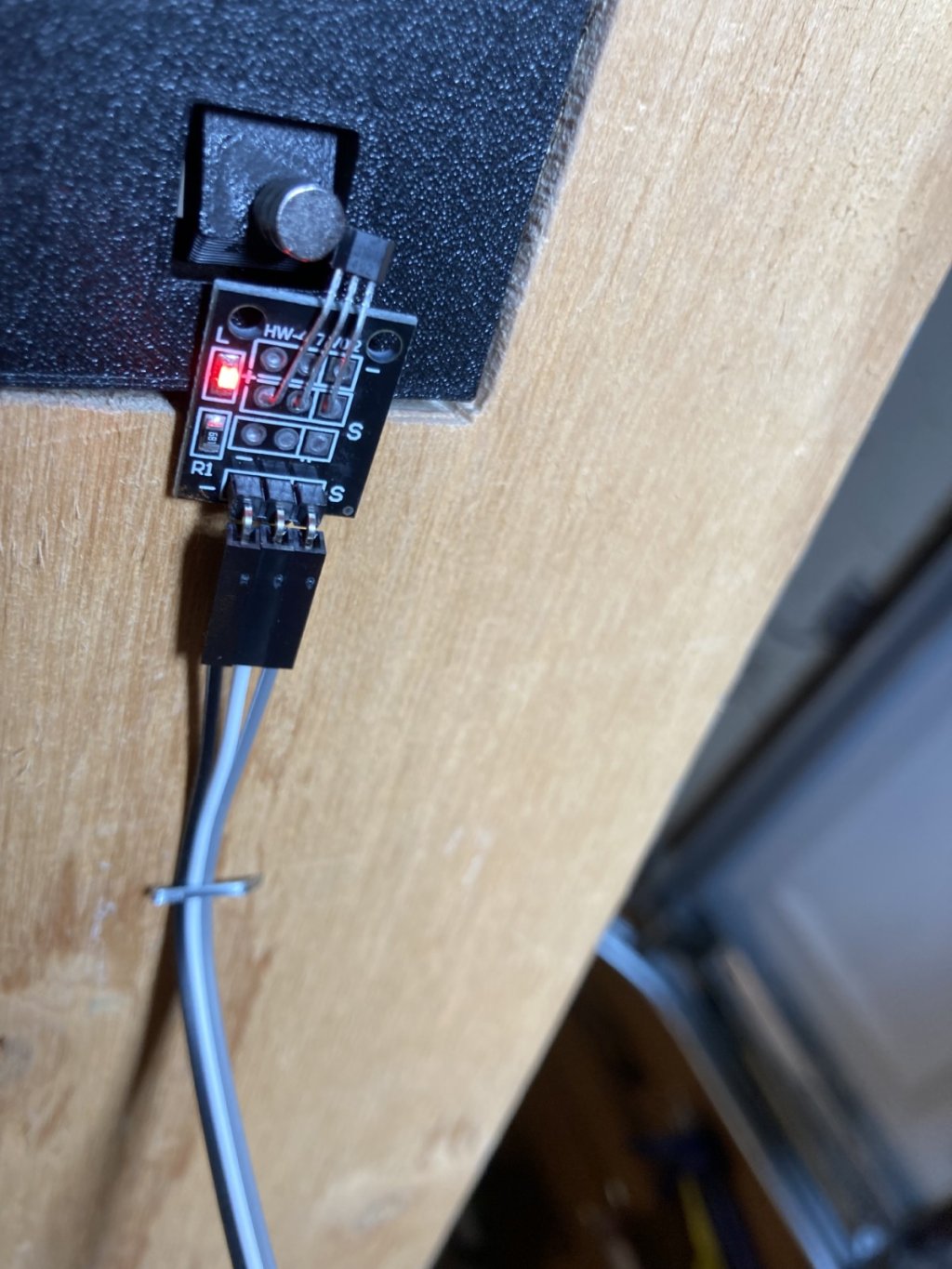
Here the flapper is down and the cars released - magnet is right next to the transistor and the bright red LED also signifies full saturation is occuring.
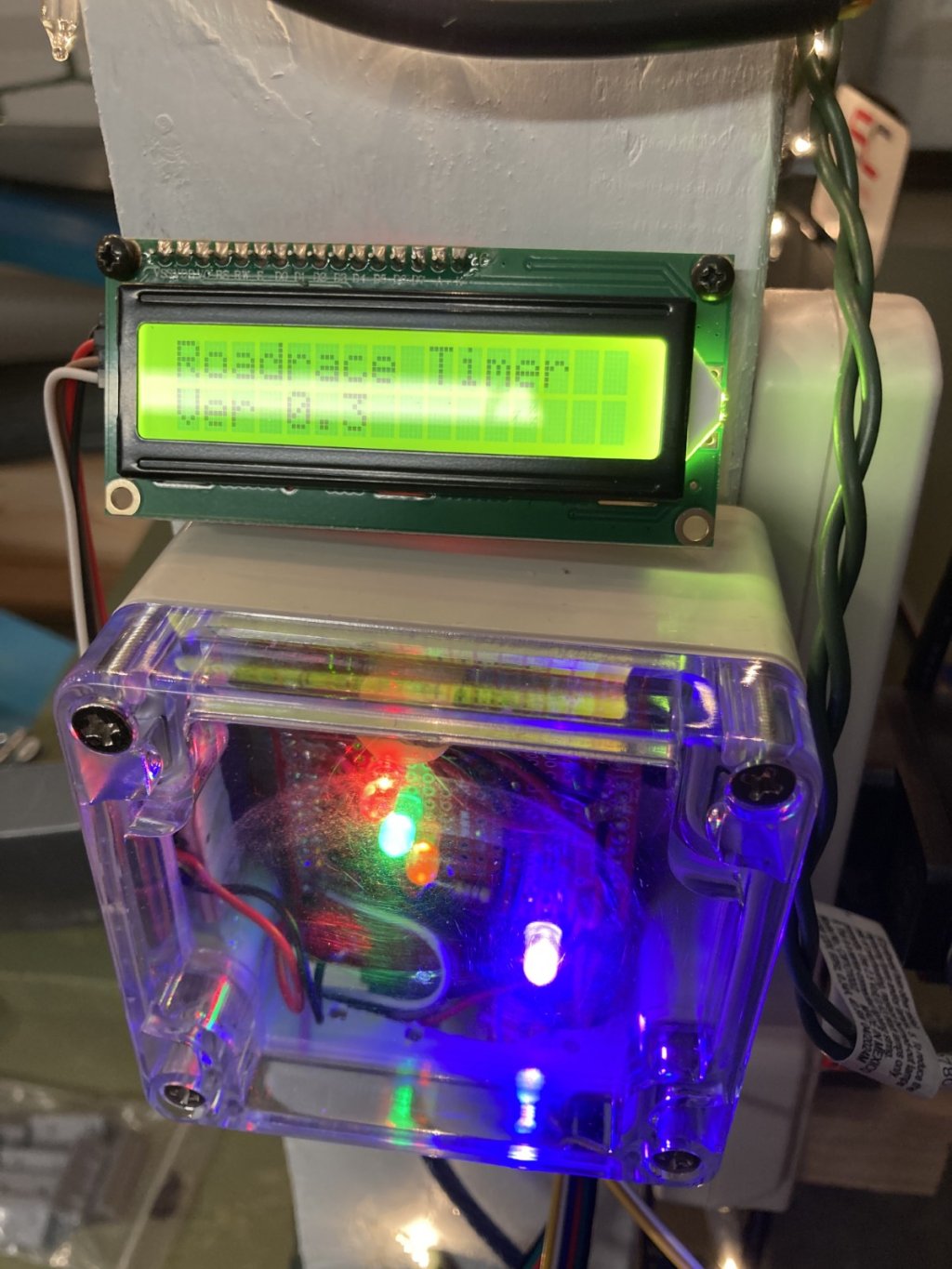
The business end of the operation
Discussion

I fix stuff. Everyday. Stuff breaks in restaurant equipment, digital reader board signs, drive thru timer systems....stuff breaks....everyday. I call tech support and I get guys/gals like you 2 (AbbyNormal & StoopidFish). They tell me where to take readings with my meter and then say ..."you need to replace...this/that/blah blah blah". I say ..."ok...the little rectangle box with 2 mounting screws and the 3 wires going in it?". They say yes and I say ok....send me one of those rectangle box thingys. Then I fix it. I don't know why it works but it does after I put a rectangle box thingy in.


I'm very curious to see the consistency/repeatable accuracy of this! Interesting concept. I know what you mean about the inconsistency of a push button or any other mechical device. My latest Arduino timer setup has me pulling the start signal off the start solenoid. I tapped into the actual 12 v being sent to the gate solenoid to power it which is after the relay instead of before it. Elimates any variations from the relay. In other words, I'm not pulling the signal from the start button, I'm getting it from the actual power sent to the start gate solenoid. The last link in the chain. Not the first. Elimates all the variable in between. Hope this makes sense. I'm not good at explaining in words.
- Interesting. Have you had enough cycles yet to notice any increase in consistency yet? I've been running straight off of a push button start switch and have been noticing inconsistencies. To the point where I can't trust using times to decide winners, but instead have to go off of wins of +2 runs over the other car. It can get pretty tedious when you have 3 ties in a row, which is where I call it. Right now I am thinking the inconsistency is coming from the mechanicals in my start gate itself. I am just procrastinating on doing the next revision. — X2Whiskey
- X2Whiskey - your thinking matches what I've experiences. First of all, yes, any mechanical slop in the gate will cause inconsistent times. In my previous setup, I would race the cars once in each lane and give the win to car that had the biggest time difference in a win. The actual times varied so much I couldn't use it to determine the winner. That set up was a JLH Krafts start gate with 9gram servo and very sloppy linkage. No programmed endpoints on the servo travel either so I all depended on how long you pressed the button. I now bought a Spool Heads start gate that uses a 12v car door lock actuator. Wired as I described above, I now have cars that can run as consistent as +/- 0.003. Gotta run. More later... — Zamak_Speed_Shop
- I think I will just a video and explain all my findings and theories regarding accurate, consistent timing. Would be a lot quicker and easier than typing it all out. — Zamak_Speed_Shop
- Thanks for the info. I'm using a much weaker 12V solenoid than one intended for car doors, so I'm sure that just enhances the various mechanical frictions and slop. — X2Whiskey
I am sure you meant de-bounce there... I have had mixed results with this type of switch depending on application. In this application it is all about switch position and repeatability. As long as it triggers in the same spot each time you should be good to go! Reliability over time will be interesting to see wether or not the holder will maintain the position. Good luck with it!