

The Secret Sauce: Goodbye to graphite

From the Editor: BlueLine Racing posted an article explaining his recipe for graphite-free lubrication back in Feb 2025. The article got a lot of attention but also attracted a lot of drama, so they chose to delete the thread entirely. I didn't realize it was removed until it was brought to my attention (h/t DCR). Thankfully, the Internet Archive had a copy of the original post.
The original post has been rewritten & edited as a How-To guide so that it may hopefully live on drama-free because it's really great information and inspiration for modders looking to experiment.
Why graphite can fall short
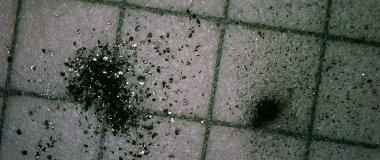
We all know a good chunk of performance gain comes from friction reduction, not hidden mechanical changes. And graphite has long been the standard lubricant in diecast racing, but it has one main drawback: It attracts dirt and debris that can leave cars dirty and inconsistent
So naturally it makes sense you'd want to find alternatives to graphite, and the result was experimenting with various sprays and oils.
However, it should be noted that many hosts and events prohibit use of spray or oil-based lubricants. This guide will be helpful if you're looking to find speed beyond what dry graphite mixtures can provide but it might not always be allowed, so just know that good old fashioned graphite will still need to remain a staple in your toolbox.
A recipe for success: Silicone spray and oils
This guide is intended primarily for stock cars. Using these methods on modified builds probably won't hurt but you'll need to experiment and do your own testing to see how much it can help (or harm).
Prep: Remove any existing graphite
If you have a car that you used graphite on prior, all graphite residue must be removed before adding any sprays or oils. If your car is new off the card you may not need to clean it but it probably won't hurt.
To clean your car:
- Rinse with warm water, adding a small drop of dish soap
- Gently flush the wheels and hubs.
- Allow the car to dry completely before proceeding.
Step 1: Apply low-viscosity silicone spray
Key requirements:
- Must be low-viscosity
- Must be safe for plastic
- Apply sparingly - less is more here
- Search for some spray brands
Application method:
- Lightly spray the wheels and inner hubs, or use a small paintbrush to control application
- Avoid oversaturation
Step 2: Patience...let time do the work
- Let the car sit 3-5 days minimum
- Run the car approximately 10 times down your track
- Do not rush to Step 4!
Cars treated this way have been shown to improve with age, sometimes running faster months later than they did initially. As Yoda said, "patience, you must have patience!"
Step 3: Add oil in tiny, tiny amounts
Once the silicone has fully cured, apply a high-quality oil lubricant. A small amount of oil lasts far longer than you might expect. Trust the science.
Recommended options:
How to apply:
- Use a syringe for precise application
- Apply the smallest amount possible
- Run the car extensively after application
Maintenance:
- Reapply oil after 50-100 runs
- Do not reapply silicone
- If the car slows down, it has likely been over-lubed - rewash and start over
What this recipe won't do for you
Using the sprays+oils can help make a fast car faster and can improve a slow-ish car, but it will not turn a dud into a winner. You still need to do lots of testing and research to find a good stock car to start with. Don't expect your Weinermobile to start blazing a trail just because you've sprayed it.
Likewise, if you're doing a custom build or mod, do all your speed testing before you start adding the lubricants. Get as much speed out of your cars as you can naturally, then apply the lube. Reducing friction is very important but there are also lots of other factors that play a role in being fast.
All in all, lubrication enhances performance - it does not replace fundamentals.
As mentioned before, make sure you read all the restrictions and rules for any event you enter. Many hosts and tournaments don't allow spray oil lubricants, but if they do, the recipe above might just help you squeak out a victory.
Discussion

This is great. I am far to impatient to wait for days before messing with things but maybe I can try it and actually wait at least once. It clearly works though


Thanks, Brian, for publishing this! I copied the original and did my best to follow the steps. You've organized the steps beautifully. It's like you're Betty Crockers' little brother, Brian Crocker.

hi everyone so I've used this method and I have had some success but I have found it is very easy to put to much either silicone or oil on "less is more" I have found so far and am yet to get consistent results yet but I'm interested to know how others have gone with this
I found that the wheels don't spin freely for as long as graphite but will give similar times on track.
here is some results from 2 experiments that are going to SST diecast for his new track Bentley gt's both about 67g and both starting with silicone 7 days before graphite or oil
note the fastest time on this track I have had is 1.789 and all my fast builds will do a 1.800-1.850
- Hi there ZeroHP. Yes, the main key to success is working hard, testing experiment, using guides such as this, as well as trying all different things. In doing so you may make that one off speed discovery. Just looking at your picture, I will make a few small observations from experience. The graphite shown, yes I am familiar with it, indeed I used it when I first started lubing cars 7 plus years ago. However if you truly wish to find speed with dust, you need to research, and get some of the high end Pinewood Derby dusts in. The difference, applied correctly is substantial. Yep I know where you got the silicon from, again (this is a frustrating area for me) there are many different brands, formulas, viscosities, and it all makes a difference. Oils, well, again, one has to look at the Pinewood Derby scene. However there are others one can test, experiment with and have success. And, yeah it is harder to source things downunder. Good luck ! — CutRock_R_Marc_D
Thank you Marc this is exactly why I'm asking out there for some different brands and advice from more experienced builders and what other people have found to be the best for them so I can move to the next level of unlocking speed I have found 2 different techniques that work for me applying graphite but a couple of my cars have qualified pretty good so perhaps a better quality graphite is all I need for now I would like to get a better understanding of which oil and silicon products work best and don't damage the plastic
next step for me better graphite until I understand the science and process of "the secret sauce" I have had a little success with it but I can't seem to replicate the process consistently and I think that it is the silicon but I still would like to know more about the best products to try thanks
I put this application process to the test, on one of my slower cars, and it made a significant improvement. I have not attemted to duplicate it on another car, but at some point I will. Since my track is shorter than most, I am sending it to "Elevation DieCast" to see how it runs on his track. I will not specify what I used, or how I applied it, as we all need to find out what works for us. At this moment, I am not sure if the car is decent fast or not as I do not have anything to compare it to. Fast on my track means very little.
- Thanks you I'm going to do more research on different products to find what works best for me but I know that there is a lot behind the science that I don’t fully understand yet — Zerohpracing
- For me, I think it is very important to get benchmarks, so you can gauge to your track, and also get benchmarks of the speed you need to get to. Great you are sending your car to Davids. That will give you a good basis of knowing where it is at, as you will need to "tune in" to know what time you need to run at home to be competitve. Good luck on your journey! — CutRock_R_Marc_D
Thanks mate my cars are running about the same as the trucks from BDR (i havent had any others out yet) so I figured that the trucks are probably not at there peak performance (still incredible)so I know I have a bit more to get but I'm pretty happy with how my builds are turning out. I tried all the hobby shops and rc places near me for some better graphite but no one has any or has even heard of pinewood derby racing before so it looks like I'm going to order some maximum velocity graphite online and hope that it is better than what I have

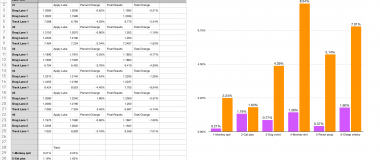
Well, I'll be phasing out Stocks and Mods with graphite. I tested 8 cars, 4 with silicone A and 4 with silicone B. All 8 cars improved their times post silicone, then I added oil A and oil B and once again all 8 cars improved their times...some numbers.
'55 Chevy Hot Ones Gen 1- Pre Silicone 2.157 second avg/ Post Silicone 2.136 second avg/ Post w/oil 2.112 avg
Flat Out 442 Hot Ones Gen 1- Pre Silicone 2.197 avg/ Post Silicone 2.129 avg/ Post w/oil 2.108 avg
Sol Aire Ultra Hots Gen 1- Pre Silicone 2.181 avg/ Post Silicone 2.132 avg/ Post w/oil 2.114 avg
I've got 8 more cars timed Pre Silicone and will try 2 different types of Silicone to apply and one more oil to incorporate for the next round of test at GBU Speed Labs, but the proof is in the pudding as they say and the numbers don't lie. The first 8 cars were mediocre Stocks that I experimented on and the next 8 are all faster Pre Silicone than the original 8.
There was a definite jump from Day 3 cure to Day 6 cure and minimal jump at Day 9 cure...then the oil was introduced at Day 11 cure. This was very educational and informative for me as I attempt to ascend the ranks.
Keep Plugging- GBU
- I've honestly had better luck with graphite... I must be doing the silicone wrong! — ManiacMotorsports
- Keep experimenting as the old trial and error is the best teacher — GBURacing
Thank you for re-posting this.